

 |
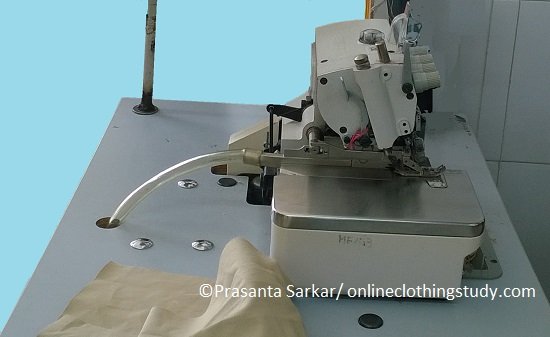
By using an overlock machine you can make various types of stitches like, stitch class 503, stitch class 504 and stitch class 512. This machine is used in both woven and knits apparel sewing and the majority used in knit garment manufacturing.
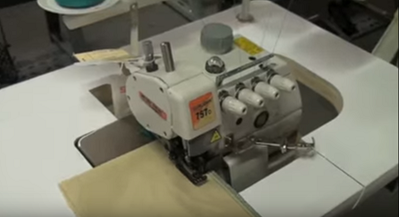 |
| Overlock machine sunken bed |
Handling and running an overlock machine easier compared to other sewing machines like lock stitch machine and coverstitch machine.
Features of overlock machines
- Cutting device: Overlock machines are equipped with a cutting device (knife) that cuts fabric edges (excess margin) while stitching.
- Adjustable seam width: Width of a seam can be set based on seam width needed in a design.
- Stitch density (SPI): Stitch density can be changed in these machines
- Safety stitch can be sewn by overlock sewing machines.
- Thread consumption by overlocker – thread consumption in overlock machines is higher than single needle lock stitch machines.
- Machine bed – Normally machines come with a raised bed – machine bed is raised than the tabletop. But in need, you can use sunken bed where the tabletop is kept in the same height of the overlock machine bed.
Usage of overlock machines:
Overlock machines are available in 3 threads, 4 threads and 5 threads overedge sewing.
This machine is used for serging garment panels (e.g. trouser panels) and for overedge stitches (e.g. side seam of T-shirts). Overlock machines give a clean finish to seam edges.
For example, in a T-shirt making overlock machine is used for operations like
- Attaching sleeve,
- Joining side seam and underarm, and
- Attaching neck rib to the neck.
Images of overlock stitches
Here are a few examples of overlock stitching
 |
| Overlock stitch @ leggings inseam |
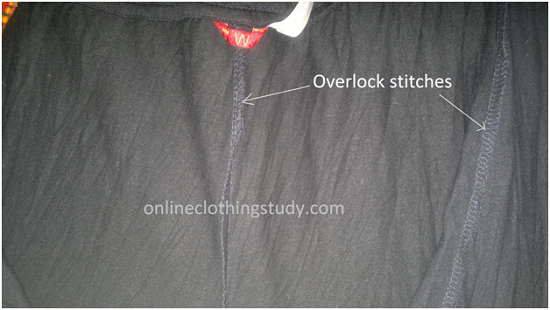 |
| Overlock stitch |
 |
| Overlock stitch @ T-shirt side seam and armhole |


Leave a Reply