

The spinning process starts with the blow room line before which blending and thorough mixing is done. The blow room comes with an efficiency of 45-50% after which, the line is followed by carding which has an efficiency of 90-95%. Hence the initial draw frame comes to the line after that the sliver is passed on to the combing section where thorough combing of the material is done. Then the material is moved to the finisher draw frame to increase the evenness. In the next step slivers are moved to the speed frame where the sliver is converted to roving then the roving goes to the ring frame.
Then comes the ring frame that gives twists to the material and hence bobbin is built up through this machine giving us the complete package.
In this article, I will discuss the machinery leading to the formation of the sliver and hence followed by the objectives and usages of the various machineries involved in the same.
The procedure of spinning starts with Ginning.
Cotton ginning:
The main objective is the removal of fibers from the seed, and the perfect ginning will be considered to be the one where the seed will be removed without the slightest injury to either the seed or the fiber.
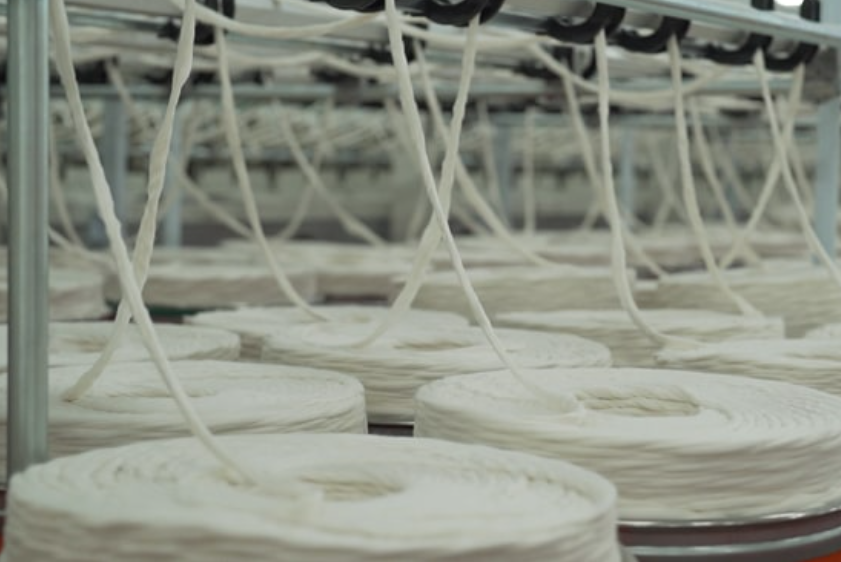
Carding mechanism:
- Individualization of the fiber. This helps in the removal of impurities.
- Disentanglement of the neps. The neps increase from machine to machine hence this carding action helps in removing the neps or their disentanglement.
- Elimination of the short fibers, the elimination of short fibers occurs in flats.
- Fiber orientation, the card is often attributed as the effect of paralyzing although it disappears during the web formation between the cylinder and the offer.
- Last but not least the main objective is the formation of the sliver.
Autoleveller:
- To measure the sliver thickness variation.
- To alter the machine draft so that a high consistent sliver thickness is continuously produced.
Draw frame machine
The tasks of the draw frame are –
- Equalizing
- Paralleling
- Blending
- Dust Removal
This was all about the first part of the spinning machinery leading to the production of the sliver.
Conclusion:
This article was all about the first part of the spinning process, the journey of the fiber to the draw frame machine where we further prepare the yarn to be fed to the combing machine for its perfect utilization. Hence concluding the whole, we can say that the fiber is first well mixed and blended. In the next stage, in the carding machine, several tasks are performed to achieve the carded sliver. Carded slivers are passed to the draw frame hence following the preparatory processes of combing action.
About the Author:
Shatarupa Majumdar is an avid learner and aspiring professional in the realm of textile technology. She is committed to contributing innovative solutions and pushing the boundaries of this ever-evolving industry. With a profound interest in the intricate world of textiles, she is dedicated to exploring the diverse facets of this field, aiming to combine technological advancements with creativity.




Leave a Reply