

In some countries fabric requirement (consumption) is calculated in yardage and fabric is purchased in yards (linear length). Fabric yardage requirement is calculated for making one single garment (the item can be bed linen, pillow, and any other home furnishing items). The symbol of the yard is ‘yd’.
You know the fabric is available in various widths. Some of the common fabric widths are 44 inches, 54 inches, 64 inches. First, you select fabric width and then calculate how many yards in length you need to purchase.
Unit conversion factors
Let us keep the unit conversion factors ready.
If you use the metric system for measuring the length of the fabrics and garment sizes, you may not need to calculate fabric consumption in yardage. But if you do, first convert all measures to inches and then calculate fabric yardage for your project (garment item).
Calculating yardage for an apparel item
For this, you need paper patterns or the measurement of all the components of a garment design. Let us say, you will be making a Kurti (ladies top) and the pattern dimension are as following.
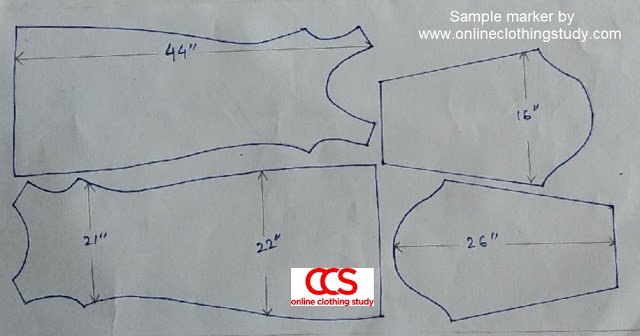
Add 5% fabric wastage in length. So, calculated length of the fabric
Now, convert the fabric length into yard = (76.65 /36) Yards = 2.129 Yards
The fabric yardage for this Kurti is 2.129 yards.
If you need to make 500 Kurtis, you need to source a total (2.129 x 500) = 1064.5 Yards of fabric.
Related: Calculating fabric consumption in meter
Calculating yardage of bedsheet (bed linens)
The bedsheet comes in different dimensions depending on the bedsheet size. For a double/Full bedsheet, the dimension is 54”x75” (width 54 inches and length 75 inches). Seam allowance in lengthwise 1+1 inches. Considering no folding is done on the sides of the bedsheets.
You can select a fabric 54 inches wide.
Including the seam allowance and edge folds, the total length of the fabric needed for one bedsheet 77 inches.
Now convert the length into Yards (you already know the conversion factory, 1 yard = 36 inches).
Yardage per bedsheet = (77/36) = 2.139 Yards
For the bulk fabric purchase, you need to add some fabric wastage to avoid a shortage in cut quantity. Let’s say, 4% wastage is added.
Related: Calculating fabric consumption of a t-shirt



Leave a Reply