

Factories employ data recorders and engineers to capture production data and make reports. Unfortunately, when data collection is done and data is compiled into report many things are changed. Sometimes it becomes too late to take further action for betterment. Many times lots of data are collected but nobody bothers to analyse those collected data and share with top management. No way to escape from the problems. In such a scenario, the industry needs a robust shop floor control system and adequate data.
Real-time shop floor production tracking system can play a very important role in providing information and reports of various activities on a real-time basis. It also supplies accurate data. For example, if you like know in a line how many pieces are produced by each operator, the detailed report is there, just one click away.
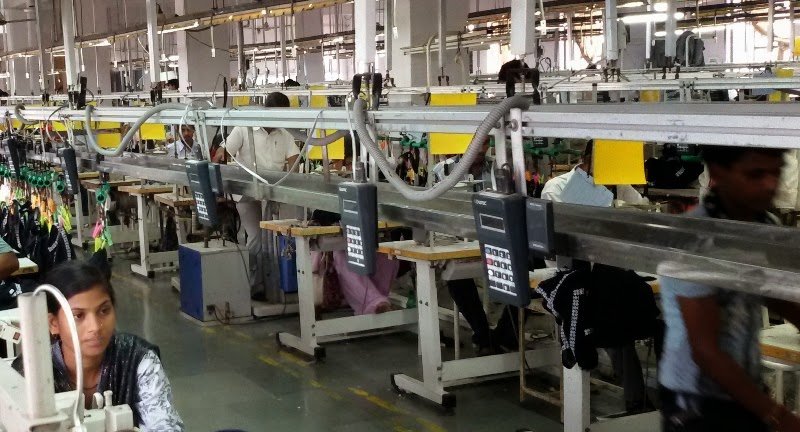 |
| Real-time production tracking terminals on the sewing floor. Image Courtesy: Leadtec |
What is Real-Time System?
An IT-enabled system that is able to provide necessary information to its users, as sooner as things are rolled on, is called a real-time system. Simply the system captures data from the shop floor (workstations) and generates reports and the by processing raw data in a computer (software). In real-time system mostly RFID (Radio Frequency Identification) technology is used.
Why Real Time System?
Once you have captured data from shop floor, you can use those data in many ways to take action for improving the process. Majority of small factories struggles for getting production status on time. There is no transparency in sharing information. You will find a big gap between actual production in floor and production figure in the status report. But you could not improve the process without having correct data, and data on time. So the need is a Real-time system.
Also Read: Various real-time products for apparel industry
Productivity improvement by Implementing Real-Time System
You might be thinking, how one can improve production just by implementing Real-Time System?
Look at various factors those are directly and indirectly helps operators to produce more pieces. Here are few important factors if you work on one of these, without fail you can bring improvement in production. Improvement rate can be increased by working on multiple factors together or one by one and fix existing problems. Majority of factories don’t work on key areas, only because they don’t have information or don’t know how to use information. Real Time shop floor control system is the savior for factories by providing information, improving visibility and pointing where to hit.
Balancing of Sewing Line
Non-productive Time (Lost Time)
Quality Data Tacking
Improved Reporting System
- Operator status (list present operators, absent operators, and operator performance etc.)
- Line balancing chart (visual display of line balancing)
- Hourly Production Report (hourly output report of each operators)
- Style status (percentage of work completed, work remained and manpower required to complete remaining work)
- Line performance (in efficiency% and lost time)
With such reports, system helps to managers to monitor operators and other shop floor employees. Everything is transparent to them. Nobody can fake in production status.
Secondly, when you know line performance and individual operators with low performance, you can find ways to improve their performance level. Take the right action to improve low performers and get improved production.
One more example, for hourly production data, you don’t need to collect production information from each operator and write on the display board. System keeps this report ready for you.
Operator Motivation
Performance Incentive scheme for sewing operator is another big motivating tool for sewing operators. You can implement a performance-based incentive system for operators to motivate them. Incentive scheme can be integrated with the real-time system.
Conclusion
Factories with poor performance can improve productivity by other means (20 ways to improve production) also. But factories that are working at a higher productivity level need to embrace this technology to bring excellence in performance.




Leave a Reply