

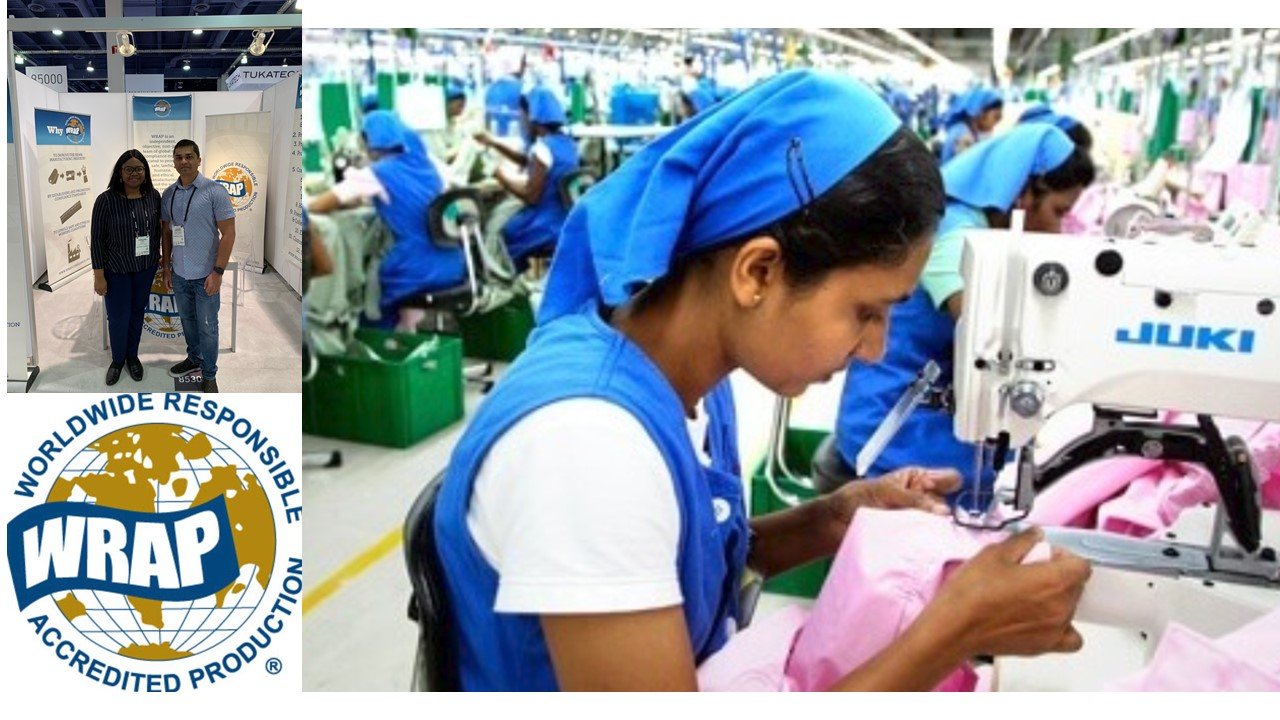
WRAP is founded on 12 principles based on generally accepted international workplace standards, local laws, and workplace regulations, and includes the spirit or language of relevant conventions of the International Labor Organization (ILO). The principles encompass human resources management, health and safety, environmental practices, and legal compliance, including import/export and customs compliance and security standards.
Related post: 20 Certifications and Standards for Textile Industry Businesses
1. Compliance with Laws and Workplace Regulations
Facilities will comply with laws and regulations in all locations where they conduct business.
2. Prohibition of Forced Labor
Facilities will not use involuntary, forced or trafficked labor.
Facilities will maintain employment strictly on a voluntary basis. Facilities will not use any forced, prison, indentured, bonded or trafficked labor. This will include ensuring that any workers they hire will be under labor contracts that fully comply with all relevant legal requirements and do not impose any form of coercion (including imposing substantial fines or loss of residency papers by workers leaving employment or restricting a worker’s ability to voluntarily end his/her employment). In addition, when hiring workers through an employment broker or agency, facilities will ensure that the workers’ passports are not withheld, all written contracts are in the native language of the workers, and recruitment fees are not borne by the workers themselves.
3. Prohibition of Child Labor
Facilities will not hire any employee under the age of 14 or under the minimum age established by law for employment, whichever is greater, or any employee whose employment would interfere with compulsory schooling.
4. Prohibition of Harassment or Abuse
Facilities will provide a work environment free of supervisory or co-worker harassment or abuse, and free of corporal punishment in any form.
Facilities will ensure a workplace that is respectful of a worker’s rights and dignity. This includes ensuring that no corporal punishment or physical coercion be used. Facilities will not engage in or tolerate sexual harassment, indecent or threatening gestures, abusive tone or language or any other kind of undesired physical or verbal contact, such as bullying. In particular, facilities will ensure proper training at all levels – including management, supervisors and workers – to secure a workplace free of harassment or abuse.
5. Compensation and Benefits
Facilities will pay at least the minimum total compensation required by local law, including all mandated wages, allowances & benefits.
Facilities will ensure proper compensation for their employees for all the work done, by providing in a timely manner all the wages and benefits that are in compliance with the local and national laws of the jurisdiction in which they are located. This will include any premiums for overtime work or work done during holidays, as well as any other allowances or benefits, including any mandatory social insurance, required by local law.
6. Hours of Work
Hours worked each day, and days worked each week, should not exceed the limitations of the country’s law. Facilities will provide at least one day off in every seven-day period, except as required to meet urgent business needs.
7. Prohibition of Discrimination
Facilities will employ, pay, promote, and terminate workers on the basis of their ability to do the job, rather than on the basis of personal characteristics or beliefs.
Facilities will ensure that all terms and conditions of employment are based on an individual’s ability to do the job, and not on the basis of any personal characteristics or beliefs. Facilities will ensure that any employment decision – involving hiring, firing, assigning work, paying or promoting – is made without discriminating against the employees on the basis of race, color, national origin, gender, sexual orientation, religion, disability, or other similar factors (pregnancy, political opinion or affiliation, social status, etc.).
8. Health and Safety
Facilities will provide a safe and healthy work environment. Where residential housing is provided for workers, facilities will provide safe and healthy housing.
Facilities will provide a safe, clean, healthy and productive workplace for their employees. Facilities shall prioritize worker health and safety above all else, and proactively address any safety issues that could arise. This will include a wide variety of requirements, such as, ensuring, among other things, the availability of clean drinking water (at no charge to workers), adequate medical resources, fire exits and safety equipment, well-lighted and comfortable workstations, clean restrooms. Further, facilities shall adequately train all their workers on how to perform their jobs safely
9. Freedom of Association and Collective Bargaining
Facilities will recognize and respect the right of employees to exercise their lawful rights of free association and collective bargaining.
Facilities will respect the freedom of each employee to choose for him or herself whether or not to join a workers’ association. Facilities cannot discriminate against workers based on whether or not they choose to associate. Both the facility and the workers shall ensure they conduct themselves in accordance with all relevant laws in this regard. Facilities will ensure an effective mechanism is in place to address any workplace grievances.
10. Environment
Facilities will comply with environmental rules, regulations and standards applicable to their operations, and will observe environmentally conscious practices in all locations where they operate.
Facilities will ensure compliance with all applicable legally mandated environmental standards, and should demonstrate a commitment to protecting the environment by actively monitoring their environmental practices. In particular, facilities will ensure proper waste management, including monitoring the disposal of any waste material – whether solid, liquid or gaseous – to ensure such disposal is done safely and in a manner consistent with all relevant laws.
11. Customs Compliance
Facilities will comply with applicable customs laws, and in particular, will establish and maintain programs to comply with customs laws regarding illegal transshipment of finished products.
Facilities will ensure that all merchandise is accurately marked or labelled in compliance with all applicable laws. In addition, facilities will keep records for all materials and orders, as well as maintain detailed production records.
12. Security
Facilities will maintain facility security procedures to guard against the introduction of non-manifested cargo into outbound shipments (i.e. drugs, explosives biohazards and/or other contraband).
Facilities will ensure adequate controls are in place to safeguard against introduction of any non-manifested cargo. In this regard, WRAP recognizes the United States Customs and Border Protection (CBP)’s C-TPAT Guidelines for Foreign Manufacturers as a best practice program, and has adopted those guidelines under this Principle.
WRAP Certification process
WRAP use third-party accredited monitors to inspect and certify the manufacturing plants. Randomly, WRAP will send their own inspectors to check the work carried out by the third-party accreditors to ensure the quality of the inspection. WRAP’s auditing partners need to meet rigorous accreditation requirements and undergo a 5-day training course conducted by WRAP and they need to attend refresher training courses once every two years.
The Cost
WRAP certification has several cost factors involved.
Certification cost for Sri Lanka is average US$500 (for a company with 150 employees) + travelling fees.
India is US$1000 + travelling cost. That cost increases to US$1200 if the factory has dormitory facilities as the accredited agency need to spend extra days to conduct inspections.
Bangladesh also charges similar to India. It is important to note that the inspection fee is calculated based on the number of employees. The more the employees, the higher the fees.
PS: Please check http://wrapcompliance.org/ for current rates and costs components.
WRAP has 3 levels of certifications:
- Platinum
- Gold
- Silver
Companies maintaining high standards and not failing an audit for 3 years receive platinum certification. Platinum certification allows the manufacturer to get an additional 2 years of WRAP membership without having to pay the membership fee of US$1150 with a total savings of US$2300. Gold members are certified for 1 year, and companies with noted compliance problems become silver members and are required to be inspected every 6 months.
It is important to note that WRAP gives a 10% discount to manufacturers joining in a group of 10 companies. For example, if the Sri Lankan Apparel Exporter’s Association applies for certification for all their members, each company in the association will receive a 10% discount.
Source http://wrapcompliance.org


Leave a Reply